
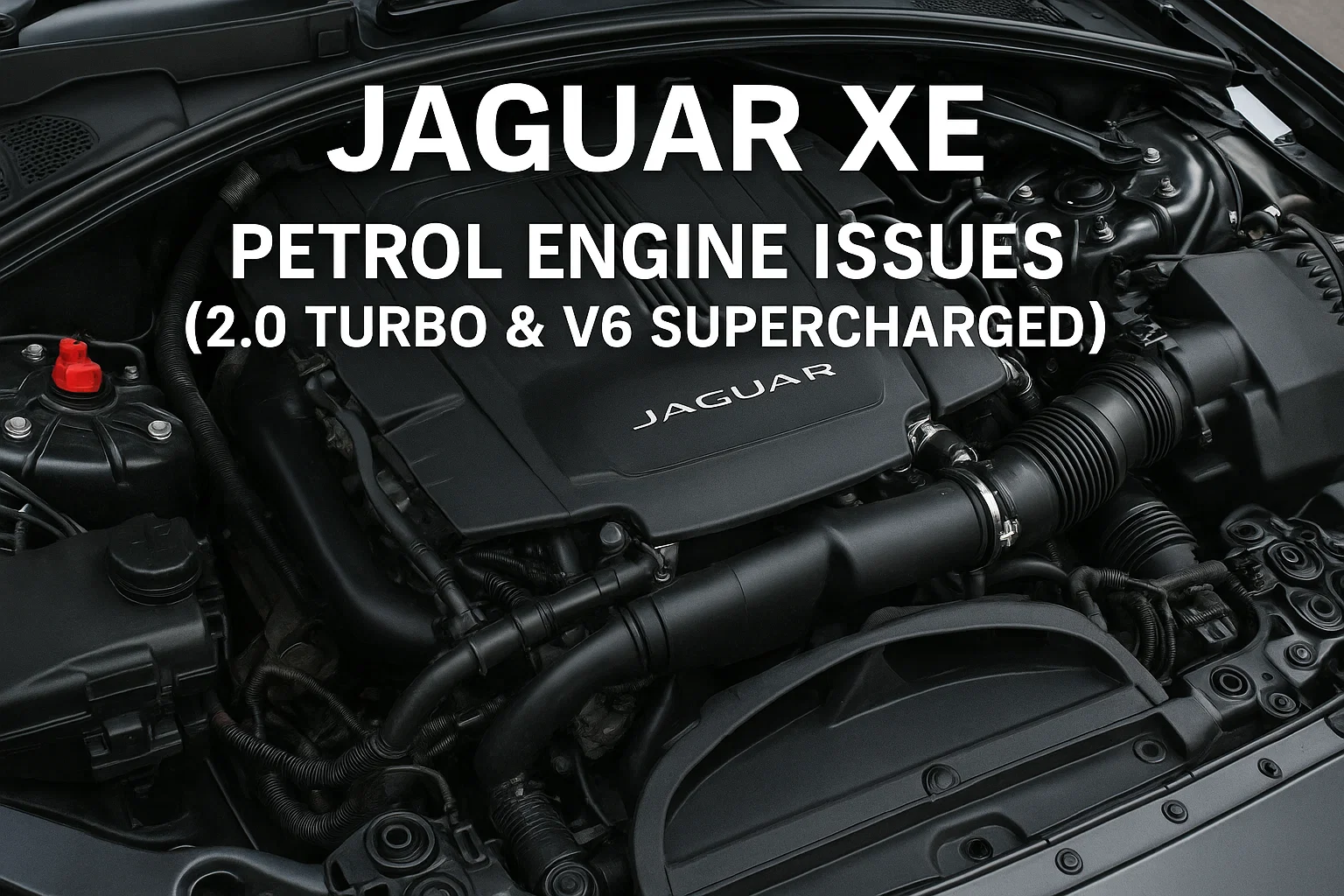
The Jaguar XE has firmly established itself as a dynamic and stylish contender in the premium compact saloon segment. Renowned for its sharp handling, luxurious interior, and undeniable pedigree, it offers a compelling alternative to the German establishment. Under the bonnet, the petrol engine options particularly the spirited 2.0 litre turbocharged Ingenium unit and the exhilarating 3.0 litre V6 Supercharged powerhouse are key to this appeal, delivering the performance and refinement drivers expect from the Jaguar nameplate.
However, like all complex, high-performance engines, they are not without their potential faults. From minor sensor hiccups to more significant mechanical concerns, being aware of common problems is key to preserving your driving pleasure. This guide is designed to equip Jaguar XE owners with a clear understanding of these common engine issues, their tell tale symptoms, and the recommended solutions to keep your saloon performing at its best.
Overview of Jaguar XE Petrol Engines
The XE’s performance is defined by two petrol engines. The 2.0-litre Turbo Ingenium unit (codenamed P200, P250, and P300) is the mainstream choice, balancing efficiency with potent turbocharged power. For ultimate performance, the 3.0-litre V6 Supercharged engine in the XE S delivers thunderous acceleration and a classic supercharged whine.
While both deliver exceptional power and refinement, they have attracted reliability complaints from owners over the years. Common issues range from oil consumption to timing chain concerns. If you’re facing major problems, exploring a fully rebuilt unit can be a cost-effective solution, which you can find on our page for Jaguar Reconditioned Engines.
Common Jaguar XE Petrol Engine Issues at a Glance
| Engine | Common Problem | Key Symptoms | Primary Cause |
| 2.0L Turbo | Turbocharger Failure | Whistling noise, power loss, black smoke | Oil starvation, carbon build-up |
| 2.0L Turbo | Timing Chain Problems | Rattling on startup, misfires | Worn chain tensioners |
| 2.0L Turbo | Oil Consumption/Leaks | Burning smell, low oil light | Faulty valve cover gasket & seals |
| 2.0L Turbo | Carbon Build-up | Rough idle, loss of power | Direct injection fuel system |
| 3.0L V6 SC | Timing Chain Wear | Rattling noise, check engine light | Weak tensioners at high mileage |
| 3.0L V6 SC | Cooling System Leaks | Coolant loss, overheating | Cracked thermostat housing, pump failure |
| 3.0L V6 SC | Supercharger Coupling | Rattling/Knocking at idle | Worn isolator coupling |
| 3.0L V6 SC | Ignition Failures | Misfires, poor acceleration | Worn coils & plugs (60k+ |
Jaguar XE 2.0 Turbo Petrol Engine Issues
The Ingenium 2.0-litre turbocharged petrol engine delivers impressive performance but is known for a few recurring problems that owners should be aware of. Catching these issues early can prevent costly repairs down the line.
Turbocharger Failure
A common and concerning issue is turbocharger failure. The primary symptoms include a loud, high-pitched whistling or whining noise under acceleration, a significant loss of power (as if the engine is ‘strangled’), and black smoke from the exhaust due to an improper air-fuel mixture.
The main causes are often oil starvation, where old or low-quality oil fails to properly lubricate the turbo’s high-speed bearings, and carbon build-up from hot exhaust gases. The solution typically involves a turbocharger rebuild or a complete replacement, which is a significant job. The best prevention is adhering to strict, regular oil changes using the exact specification of oil recommended by Jaguar.
Timing Chain Problems
Many owners report timing chain concerns, particularly in earlier Ingenium engines. The key symptom is a distinct rattling or chattering noise from the engine during a cold start that may last for a few seconds. This can progress to engine misfires and, in severe cases, catastrophic engine damage if the chain skips a tooth.
The root cause is usually premature wear or failure of the hydraulic timing chain tensioners, which fail to keep the chain taut. The fix requires replacing the entire timing chain kit, including the chains, tensioners, and guides—a complex and labour-intensive job that is crucial for engine longevity.
Oil Leaks & Consumption
Excessive oil consumption and leaks are frequent complaints. Symptoms include a burning oil smell from the engine bay, the low oil pressure warning light illuminating, and needing to top up oil more frequently than expected.
A common cause is leaks from the valve cover gasket and other engine seals, which can deteriorate over time. The solution is to identify the source of the leak and replace the faulty gasket or seal. Regularly checking your oil level is essential to avoid running the engine low on oil, which can cause severe damage.
Carbon Build up on Intake Valves
This is a inherent issue with many direct injection engines, including the Ingenium. Fuel is injected directly into the cylinder, bypassing the intake valves, so no fuel washes over them to clean them. Symptoms of severe carbon build-up include a rough idle, hesitation, and a noticeable loss of power and fuel economy.
The only effective fix is a manual cleaning process known as walnut blasting, where crushed walnut shells are used to blast away the carbon deposits without damaging the valves. This specialised service restores lost performance and smoothness.
Jaguar XE 3.0 V6 Supercharged Petrol Engine Issues
The thunderous 3.0 litre V6 Supercharged engine is a masterpiece of forced induction, delivering exhilarating performance. However, its complexity means it can be prone to specific high mileage issues that require attention to maintain its health and power.
Timing Chain Tensioner Wear
While not as prevalent as in the 2.0L, the V6 is not immune to timing chain concerns. The key symptom is a rattling or metallic noise from the front of the engine, most audible during a cold start. This may be accompanied by a check engine light as the variable valve timing system struggles with incorrect timing.
The cause is often worn-out hydraulic timing chain tensioners. These components can lose pressure over time and high mileage, failing to keep the chain taut and allowing it to slap against the guides. The only permanent solution is a significant job involving the replacement of the timing chains, tensioners, and guides to ensure long-term reliability.
Cooling System Leaks
This powerful engine generates a lot of heat, putting stress on the cooling system. Be alert for symptoms like a persistent loss of coolant with no visible puddle, the temperature gauge rising higher than normal, or warning messages for overheating.
The most frequent causes are a cracked plastic thermostat housing, which is a known weak point, and leaks from the water pump or its seals. The fix involves replacing the faulty thermostat housing (often with an updated part), addressing any water pump issues, and performing a pressure test on the entire cooling system to identify and seal any other minor leaks.
Supercharger Coupling Noise
A distinctive issue unique to supercharged engines is a worn isolator coupling. The main symptom is a distinct rattling or knocking noise at idle that disappears as engine RPM increases. The sound is often mistaken for a serious engine knock but is localized to the supercharger.
This noise is caused by wear in the supercharger’s isolator coupling, a small rubber-damped component that connects the supercharger snout to the internal rotors. The solution can range from replacing the specific coupling to a full supercharger rebuild if internal bearings are also worn.
Coil Pack & Spark Plug Failures
As a high-performance engine with two spark plugs per cylinder, ignition component wear is a common service item. Symptoms include engine misfires (especially under load), rough running, a lack of power, and an illuminated check engine light.
This is simply due to the age and high mileage (typically 60,000+ miles) of these components. The fix is a standard maintenance procedure: replacing all six spark plugs and the corresponding ignition coils. Using high-quality OEM or premium aftermarket parts is crucial for optimal performance and longevity.
Signs You May Need Engine Repair or Replacement
Ignoring early warning signs can lead to extensive and expensive damage. Key indicators that your Jaguar XE needs professional attention include persistent knocking, rattling, or unusual engine noises, which often point to internal wear. A noticeable loss of power or poor acceleration suggests issues with compression, fueling, or boost. Keep a close eye on excessive oil or coolant consumption, as this can signal leaks or internal failures. Finally, a persistent check engine light is your car’s direct way of communicating that a fault code has been stored and requires immediate diagnosis.
Why Choose a Reconditioned Jaguar XE Petrol Engine?
Opting for a reconditioned engine is a smart, cost-effective solution for major repairs. These engines are not just repaired; they are upgraded to fix known design flaws, such as weak timing chain tensioners, leaky seals, and problematic turbos. At 40 to 60% cheaper than a brand-new unit, a reconditioned engine from a reputable provider like Allied Engine comes with full warranty coverage and is rigorously tested for reliability. For owners facing a catastrophic failure, it is a far more economical alternative to a dealership replacement, restoring your XE’s performance without the premium price tag.
Conclusion
In summary, while the Jaguar XE’s 2.0 litre Turbo and 3.0-litre V6 Supercharged engines deliver exceptional performance, they are known for a set of recurring issues. Early diagnosis and proactive preventive maintenance are your best defences against costly repairs. However, if you are facing severe mechanical problems, investing in a reconditioned engine presents a cost-effective and reliable solution, restoring your XE to its former glory and ensuring many more miles of driving pleasure. Stay vigilant and address warnings promptly.
FAQs
Is the Jaguar XE 2.0 Turbo engine reliable?
While it delivers excellent performance, the 2.0 Turbo Ingenium engine has a mixed reputation for reliability. Known issues like timing chain tensioner wear, oil consumption, and turbocharger problems are well documented, particularly in pre-2018 models. Later models saw improvements, and reliability is greatly enhanced with meticulous, regular maintenance using the correct specifications of oil and parts.
What’s the most common problem in the XE V6 petrol engine?
One of the most frequent issues reported by owners is a rattling noise from the supercharger coupling at idle. Other common problems include cooling system leaks, often from the plastic thermostat housing, and timing chain tensioner wear at higher mileages, which presents as a startup rattle.
How much does a Jaguar XE engine rebuild cost in the UK?
A full engine rebuild is a major undertaking. For the 2.0L Turbo, costs can range from £3,500 to £6,000+, while a rebuild on the complex 3.0L V6 can easily exceed £7,000 due to higher parts and labour costs. This makes a warranty-backed reconditioned engine unit a often more economical choice.
Can I replace my 2.0 Turbo with a reconditioned V6?
This is an extremely complex and generally not recommended swap. It involves far more than just the engine, requiring changes to the ECU, wiring harness, cooling system, exhaust, and drivetrain components. The cost and technical challenges make it impractical compared to replacing your existing engine with a like-for-like reconditioned unit.
How long do Jaguar petrol engines last after reconditioning?
A professionally reconditioned engine, where all known weaknesses are addressed and upgraded, should be considered a new unit for all practical purposes. With proper running-in and adherence to a strict maintenance schedule, a reconditioned Jaguar petrol engine can reliably last for well over 100,000 miles.