
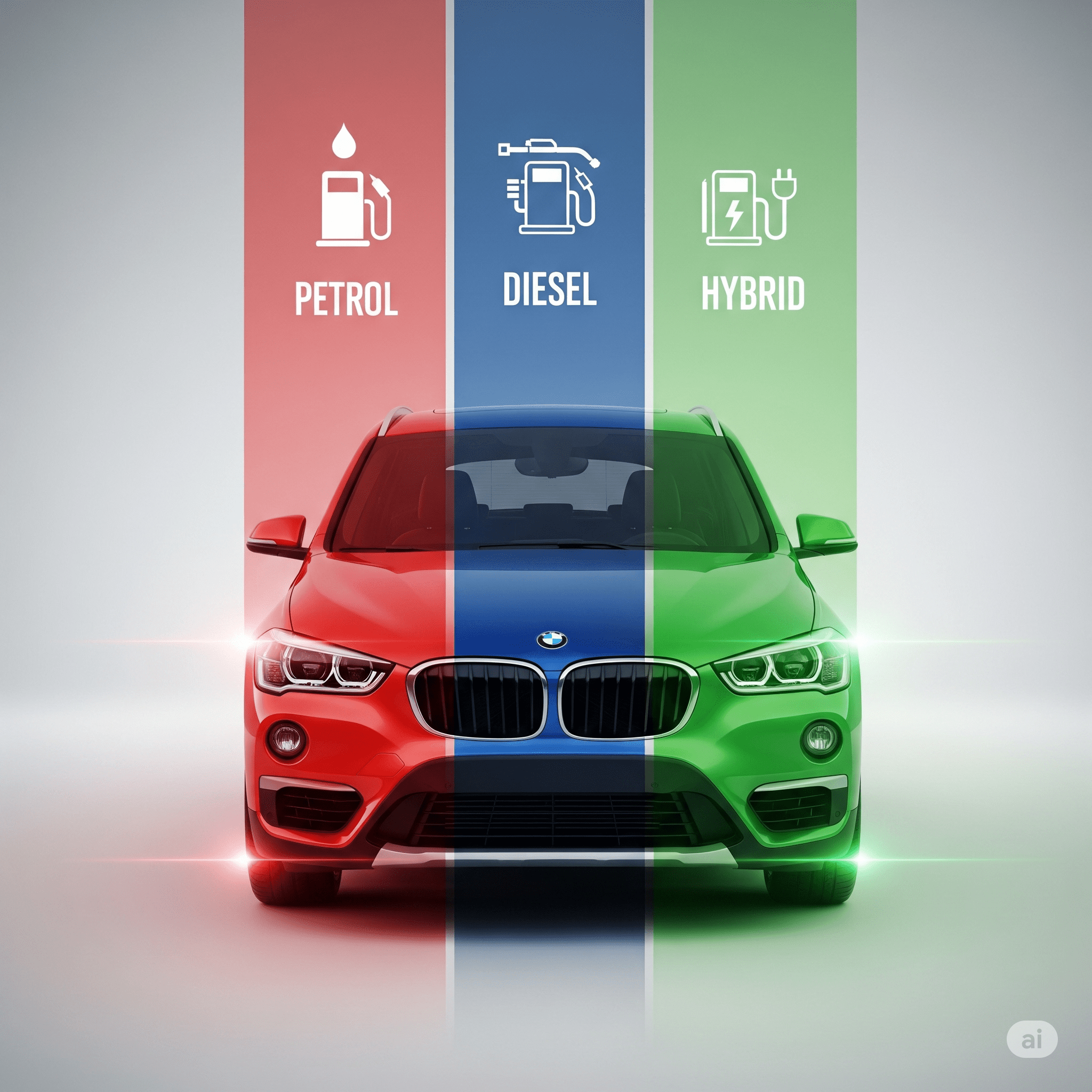
The BMW X1 is a standout in the compact luxury SUV segment, offering a perfect blend of style, performance, and practicality. Whether you prioritize fuel efficiency, raw power, or eco-friendly driving, the X1’s range of petrol, diesel, and hybrid engines ensures there’s an option for every driver.
Understanding the different engine choices is crucial because it directly impacts:
- Performance: Acceleration, towing capability, and driving dynamics
- Efficiency: Fuel economy and running costs
- Environmental Impact: Emissions and sustainability
In this guide, we’ll break down each BMW X1 engine option, helping you choose the best one for your needs.
Stay tuned as we explore:
Petrol engines: Balanced power and responsiveness
Diesel engines: Fuel efficiency and torque for long-distance driving
Hybrid models: Eco-friendly performance with electric assistance
BMW X1 Engine Overview
The BMW X1 has evolved across two key generationsthe F48 (2015–2022) and the latest U11 (2022–present) each offering a range of petrol, diesel, and hybrid engines. Whether you’re looking for efficiency, performance, or a balance of both, BMW provides multiple options to suit different driving needs.
Below is a comparison table summarizing the key engine types available in recent models:
BMW X1 Engine Options Comparison
| Engine Type | Model Variant | Displacement | Power (HP) | Torque (Nm) | Fuel Economy (MPG) | 0-60 mph (sec) |
| Petrol | sDrive18i (U11) | 1.5L 3-cyl Turbo | 136 | 230 | ~42 | 9.2 |
| Petrol | xDrive23i (U11) | 2.0L 4-cyl Turbo | 218 | 360 | ~36 | 7.1 |
| Petrol | M35i xDrive (U11) | 2.0L 4-cyl Turbo | 300 | 400 | ~32 | 5.4 |
| Diesel | sDrive18d (F48) | 2.0L 4-cyl Turbo | 150 | 350 | ~55 | 9.0 |
| Diesel | xDrive25d (F48) | 2.0L 4-cyl Turbo | 231 | 450 | ~47 | 6.6 |
| Plug-in Hybrid | xDrive25e (F48) | 1.5L 3-cyl + eMotor | 220 | 385 | ~130+ (electric mode) | 6.8 |
| Plug-in Hybrid | xDrive30e (U11) | 1.5L 3-cyl + eMotor | 245 | 477 | ~140+ (electric mode) | 6.5 |
Petrol Engines: Performance & Benefits
The BMW X1 petrol engines deliver a refined, responsive driving experience, making them ideal for drivers who prioritize smooth acceleration and a quieter ride over raw efficiency. Let’s break down the key petrol variants, their performance, and what to expect.
Popular Petrol Variants
BMW X1 sDrive18i (U11 Generation – 2022+)
- Engine: 1.5L 3-cylinder turbocharged
- Power: 136 HP | Torque: 230 Nm
- 0-60 mph: 9.2 sec
- Fuel Economy: ~42 MPG
Driving Feel & Acceleration:
Lightweight and nimble, great for city driving
Decent low-end torque for quick starts
Smooth but not overly sportybest suited for casual drivers
City vs. Highway Performance:
- City: Agile and fuel-efficient in stop-and-go traffic.
- Highway: Struggles slightly at high-speed overtaking due to modest power.
Fuel Efficiency & Maintenance:
- One of the most efficient petrol options in the X1 lineup.
- Lower maintenance costs compared to diesel (no DPF/AdBlue concerns).
BMW X1 xDrive20i / xDrive23i (U11 Generation – 2022+)
- Engine: 2.0L 4-cylinder turbocharged
- Power: 170-218 HP | Torque: 280-360 Nm
- 0-60 mph: 7.1–8.1 sec
- Fuel Economy: ~36 MPG
Driving Feel & Acceleration:
Stronger pull than the 1.5L, better for spirited driving
More confident highway overtaking
xDrive (AWD) provides better traction in wet/slippery conditions
City vs. Highway Performance:
- City: Slightly thirstier than the sDrive18i but still manageable.
- Highway: Excellent for long-distance cruising with ample power.
Fuel Efficiency & Maintenance:
- Higher fuel consumption than diesel but still reasonable for a 2.0L turbo.
- Reliable engine with typical BMW maintenance costs.
Pros and Cons of Petrol Engines
Advantages
Lower emissions than diesel (better for urban eco zones)
Smoother & quieter ride (less engine vibration)
Easier cold starts (better for short trips)
Less complex maintenance (no diesel particulate filter or AdBlue)
Disadvantages
Higher fuel consumption than diesel (especially in the 2.0L)
Less torque for towing & heavy loads (diesel is better for hauling)
More frequent refueling (smaller tanks in some variants)
Who Should Choose a Petrol BMW X1?
- City commuters who want a quiet, smooth ride.
- Drivers who prefer lower maintenance costs over fuel savings.
- Those who enjoy a more responsive throttle (vs. diesel’s lag).
Diesel Engines: Torque & Long-Distance Efficiency
The BMW X1 diesel engines are built for drivers who prioritize fuel efficiency, high torque, and long-distance comfort. While diesel SUVs face increasing restrictions in urban areas, they remain a top choice for highway cruising and towing. Let’s examine the key variants and their strengths.
Popular Diesel Variants
BMW X1 xDrive18d (F48 Generation – 2015-2022)
- Engine: 2.0L 4-cylinder turbo diesel
- Power: 150 HP | Torque: 350 Nm
- 0-60 mph: ~9.0 sec
- Fuel Economy: ~55 MPG
Torque & Towing Capability:
Strong low-end pull ideal for overtaking and hauling
Towing capacity up to 2,000 kg (when properly equipped)
Mileage Benefits:
- One of the most fuel-efficient X1 models, perfect for long commutes.
- Real-world highway efficiency often exceeds petrol by 25-30%.
Emission Standards:
- Euro 6 compliant (AdBlue injection reduces NOx emissions).
- May face ULEZ/CAZ charges in some cities.
BMW X1 xDrive20d (F48 & U11 Generations)
- Engine: 2.0L 4-cylinder turbo diesel
- Power: 190 HP (F48) / 197 HP (U11) | Torque: 400 Nm
- 0-60 mph: ~7.5 sec
- Fuel Economy: ~50 MPG
Torque & Towing Capability:
Even stronger acceleration than the 18d, with near-instant turbo response.
Best-in-class towing for a compact SUV.
Mileage Benefits:
- Slightly lower MPG than the 18d but still far better than petrol.
- Extended range (600+ miles on a full tank).
Emission Standards:
- Euro 6d compliant (cleaner than older diesels).
- Still restricted in some cities (check local regulations).
Pros and Cons of Diesel Engines
Advantages
- Superior fuel economy (best for high-mileage drivers)
- Strong low-end torque (better for towing & highway driving)
- Longer engine lifespan (if well-maintained)
- Higher resale value (in markets where diesel is still favored)
Disadvantages
- Stricter emission zones (ULEZ, CAZ penalties in cities)
- Louder engine sound (more vibration than petrol)
- Higher maintenance costs (DPF, AdBlue, turbo concerns)
- Sluggish throttle response in some conditions (turbo lag)
Hybrid Powertrain: The Electrified BMW X1
The BMW X1 hybrid combines efficiency and performance, offering the best of both worlds electric-only driving for short commutes and petrol power for longer trips. With tightening emissions regulations, the plug-in hybrid (PHEV) is a smart choice for eco-conscious drivers.
xDrive25e & xDrive30e Plug-in Hybrid Details
BMW X1 xDrive25e (F48 PHEV – 2020-2022)
- Powertrain: 1.5L 3-cyl turbo petrol + eMotor
- Combined Power: 220 HP | Torque: 385 Nm
- Electric-Only Range: ~30–35 miles (WLTP)
- 0-60 mph: 6.8 sec
- Fuel Economy (Hybrid Mode): ~130+ MPG
BMW X1 xDrive30e (U11 PHEV – 2023+) (Upgraded Model)
- Powertrain: 1.5L 3-cyl turbo petrol + eMotor
- Combined Power: 245 HP | Torque: 477 Nm
- Electric-Only Range: ~35–40 miles (WLTP)
- 0-60 mph: 6.5 sec
- Fuel Economy (Hybrid Mode): ~140+ MPG
Driving Modes
Electric (eDrive): Zero-emission driving (ideal for city commutes).
Hybrid (Auto eDrive): Balances petrol and electric for efficiency.
Sport (XtraBoost): Maximizes power for dynamic driving.
Charging Time & Home Charger Options
- Standard Wall Plug (2.3 kW): ~5–6 hours (0-100%)
- Home Wallbox (3.7 kW): ~3–4 hours (0-100%)
- Public Fast Charger (7.4 kW): ~2 hours (0-100%)
(No DC fast-charging support)
Benefits of Hybrid
Advantages
- Ultra-low emissions (exempt from ULEZ/CAZ charges)
- Ideal for city driving (30+ miles of electric-only range)
- Massive fuel savings (if regularly charged)
- Smooth, quiet electric drive (no engine vibration)
- Tax benefits (lower BIK for company car drivers)
Disadvantages
- Higher upfront cost (vs. petrol/diesel)
- Reduced boot space (battery reduces cargo capacity)
- Less efficient on long trips (once battery depletes)
- Requires charging discipline (max benefits only with daily charging)
BMW X1 Engine Comparison Table (2023–2025 Models)
| Model | Engine | Power | 0-60 | MPG | Drivetrain |
| sDrive18i | 1.5L 3cyl Petrol | 136 HP | 9.2s | 42 | FWD |
| xDrive23i | 2.0L 4cyl Petrol | 218 HP | 7.1s | 36 | AWD |
| M35i xDrive | 2.0L 4cyl Petrol (M) | 300 HP | 5.4s | 32 | AWD |
| xDrive18d | 2.0L 4cyl Diesel | 150 HP | 9.0s | 55 | AWD |
| xDrive30e PHEV | 1.5L 3cyl + eMotor | 245 HP | 6.5s | 140+ | AWD |
Conclusion:
The BMW X1 offers a versatile range of engines to match different driving needs:
- City Commuters: The sDrive18i (petrol) or xDrive30e (hybrid) deliver efficiency and low running costs.
- Long-Distance Drivers: The xDrive18d/xDrive20d (diesel) provide unbeatable fuel economy and torque.
- Performance Seekers: The M35i xDrive offers thrilling acceleration (0-60mph in 5.4s).
- Eco-Conscious Buyers: The xDrive30e PHEV combines electric driving with petrol flexibility.
(FAQs)
Which BMW X1 engine is most fuel-efficient?
Diesel: The xDrive18d (55 MPG) is the most efficient, ideal for long-distance driving.
Hybrid: The xDrive30e PHEV offers ~140+ MPG (when regularly charged).
Is the diesel BMW X1 being phased out in the UK?
Yes, gradually. Due to stricter emissions laws, BMW is shifting focus to hybrid and electric models, but diesel X1s remain available for now.
How long does the hybrid battery last?
8–10 years (or ~100,000+ miles) with proper care. BMW offers an 8-year/100,000-mile warranty on PHEV batteries.
Can I drive the hybrid model in full-electric mode?
Yes! The xDrive30e PHEV offers ~35 miles of pure electric range (enough for city commutes).
Is petrol or diesel better for long-term ownership?
Diesel: Better for high-mileage drivers (lower fuel costs, longer engine life).
Petrol: Better for city drivers (lower maintenance, avoids ULEZ charges).
Hybrid: Best for tax savings & eco benefits, but higher upfront cost.